JOIN US
Join our community!
Sign up to our newsletter to hear about the latest
special offers and news, exciting projects and events.
Welcome to the world of Beaumier.



{{responseMessage}}
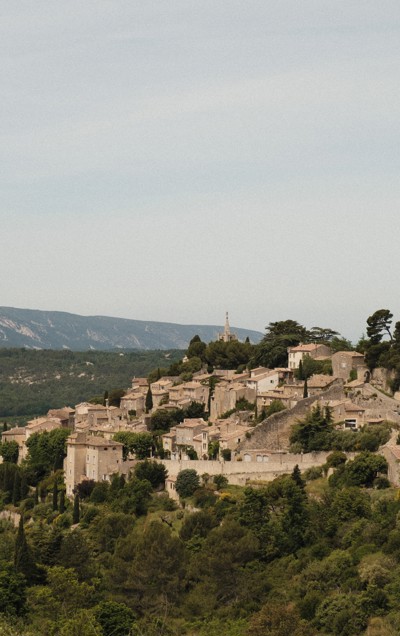
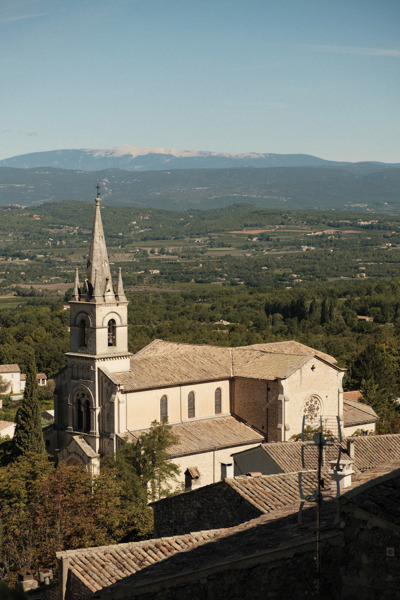
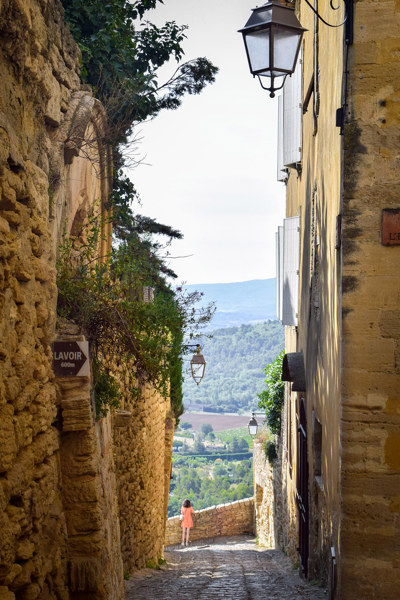
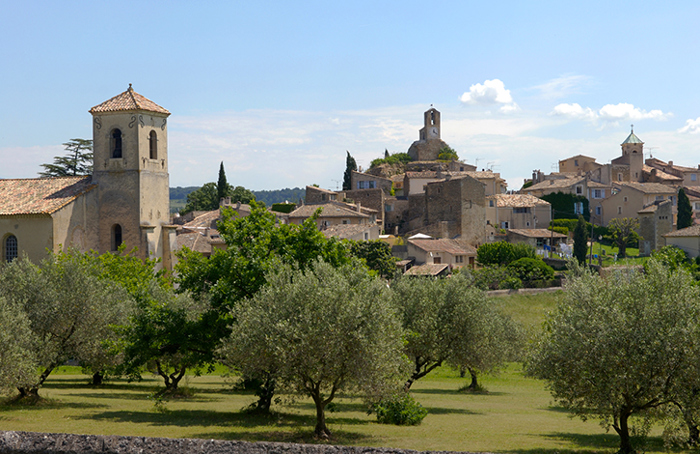
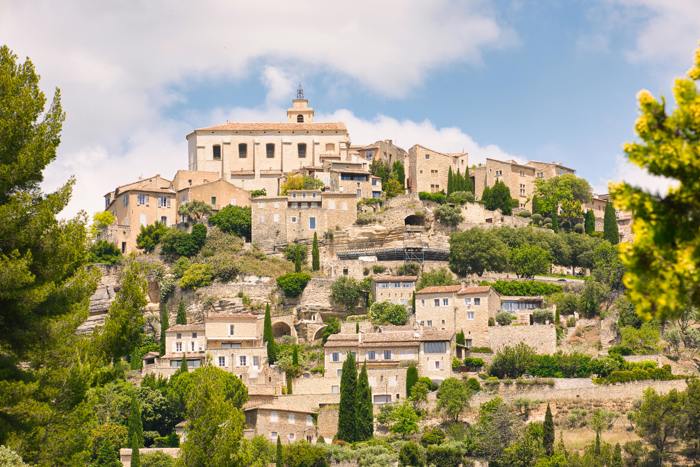
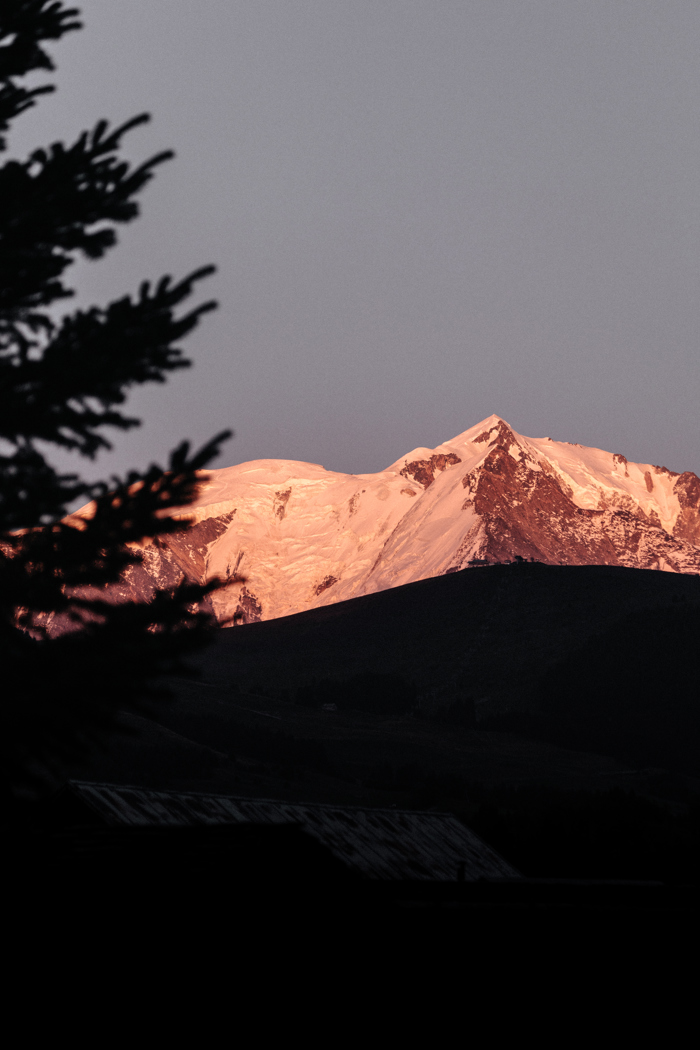
From a distance, Bonnieux appears almost improbable — a village of golden stone rising in terraces up the northern face of the Luberon, crowned by the spire of a 12th-century church. Step inside its lanes and the scale shifts. The streets are narrow, shaded and quiet. There are few concessions to tourism. What Bonnieux offers instead is something harder to find in the Luberon: a village that functions on its own terms, with a Friday market, a handful of excellent restaurants, and views across the valley to Lacoste and beyond that are among the finest in Provence.
Bonnieux divides naturally into two. The lower village is where most life happens — cafés, boutiques, the weekly market, the new church built in 1870. The upper village is older, quieter and steeper, reached by stone staircases that climb through arched passageways and past Renaissance façades. At the top stands the Vieille Église, a Romanesque church that has not held a service in over a century and a half but offers, from its cedar-shaded terrace, a panorama that stretches across the Luberon valley to Mont Ventoux on a clear day.
The walk from bottom to top takes around 20 minutes. Go slowly. The village rewards it.
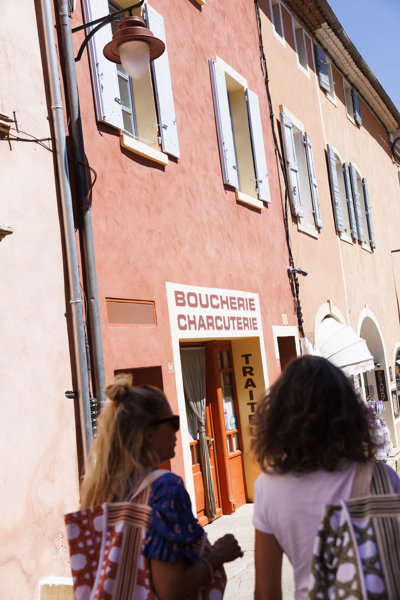
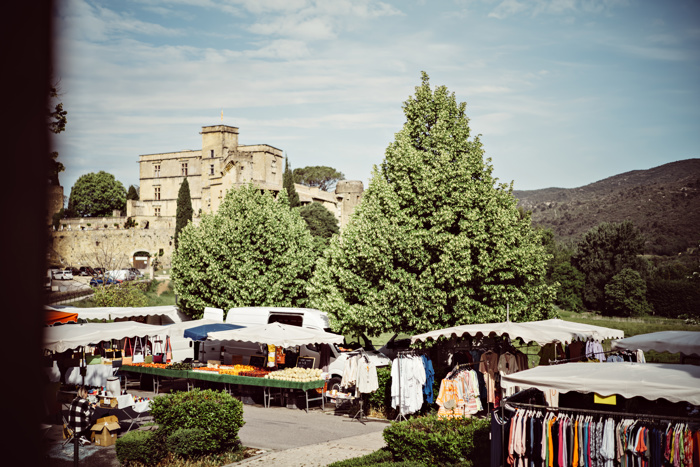
Every Friday morning, the lower village wakes up to market stalls spreading from Place Gambetta down through the surrounding streets. Bonnieux's market is quieter than Lourmarin's — less known, which makes it more local in feel. Fresh produce, olive oils, tapenade, Provençal linen, market baskets and handmade pottery fill the stalls. Arrive by 09:00 to catch it at its best, and pick up bread and cheese before continuing on to Pont Julien for a picnic by the river.
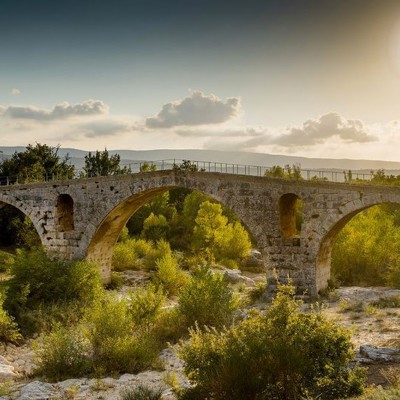
Six kilometres north of the village, on the road towards Apt, Pont Julien is one of the best-preserved Roman bridges in France. Built around 3 BC as part of the Via Domitia — the road that connected Spain to Italy — its three limestone arches span the Calavon river with a precision that needed no revision for over 2,000 years. Vehicles crossed it until 2005, when a new road was built nearby to protect the structure. A plaque marks the occasion: "We do not know who was the first person to cross, but an Irishman was the last."
Today it belongs to walkers and cyclists. Free to visit, always open. Worth the short detour.
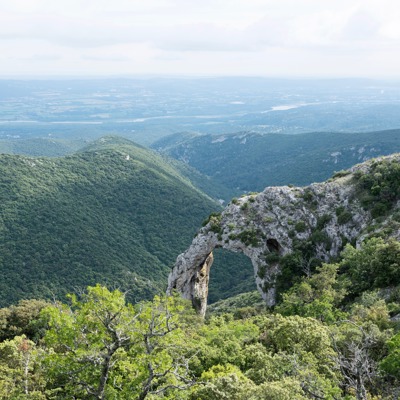
Six kilometres south of Bonnieux, a winding road climbs through scrubland to the Forêt des Cèdres — a cedar forest planted in 1861 using seeds brought from the Atlas Mountains of Algeria. The choice of tree was deliberate: cedars suited the altitude and dry limestone plateau of the Petit Luberon. What grew from that decision is a canopy of spreading boughs at 700 metres above sea level, crossed by marked trails with views back across the valley to the village and, on clear days, as far as the Alps.
It is the kind of place that makes the heat of a Provençal summer feel like a distant problem. Go early or late. Access may be restricted on very dry or windy days.
Directly across the valley from Bonnieux, Lacoste is the village you have been watching from above. The ruined château at its summit belonged, in the 18th century, to the Marquis de Sade, who retreated here repeatedly between scandals, eventually installing a private theatre that seated 80. The château was bought in 2001 by Pierre Cardin, who restored part of it and hosted a summer arts festival in its ancient quarries. The views from the ruins back towards Bonnieux are reason enough to make the short drive.
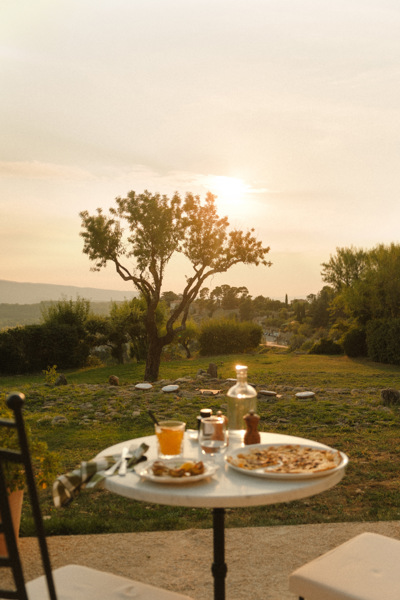
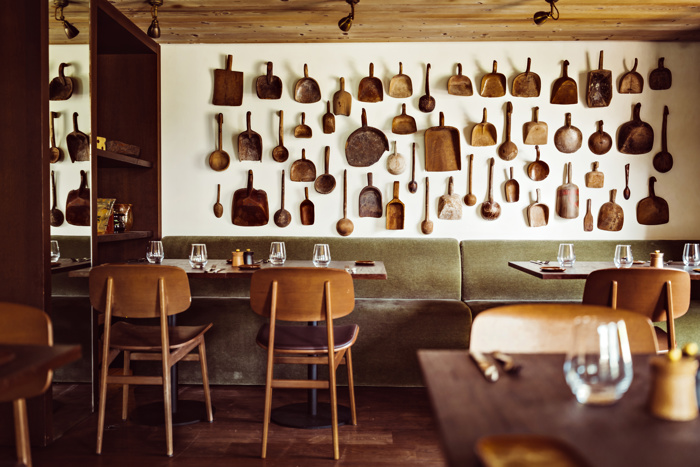
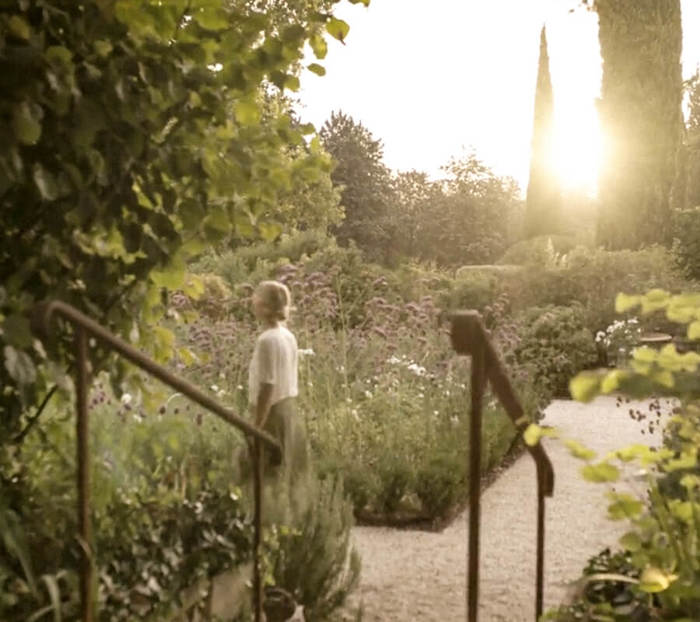
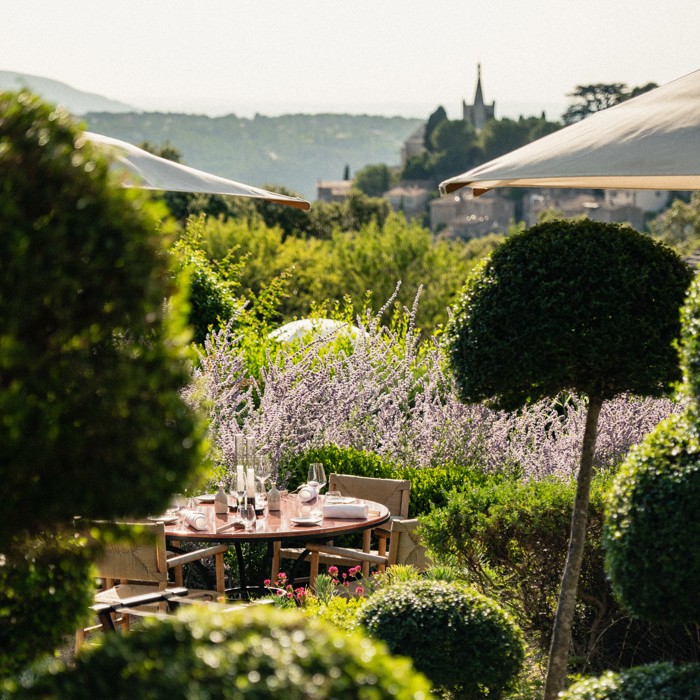
Bonnieux has enough good restaurants to justify staying more than a day. For dinner, the restaurant at Capelongue — a 5-star hotel in Provence perched above the village — works with the seasons and the landscape in equal measure: a kitchen where the terroir of the Luberon arrives on the plate in ways that feel neither forced nor precious. The more relaxed sibling, La Bergerie, sits lower on the estate and serves the kind of lunch that makes an afternoon feel well spent: grilled vegetables, local charcuterie, wine from nearby vineyards. Both kitchens draw from La Bastide, the kitchen garden at Capelongue, which supplies much of what appears on the menu.
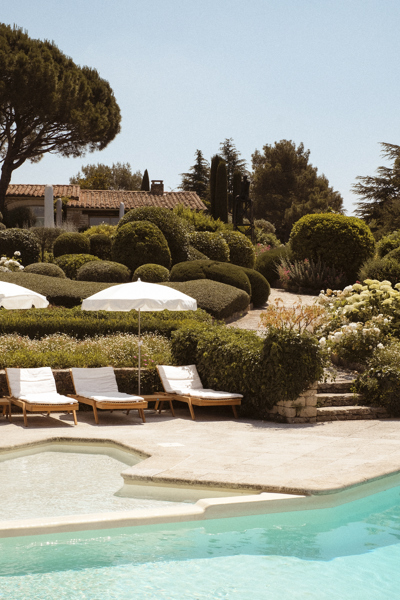
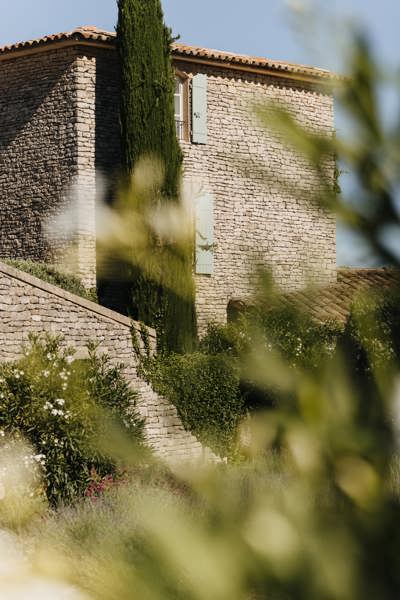
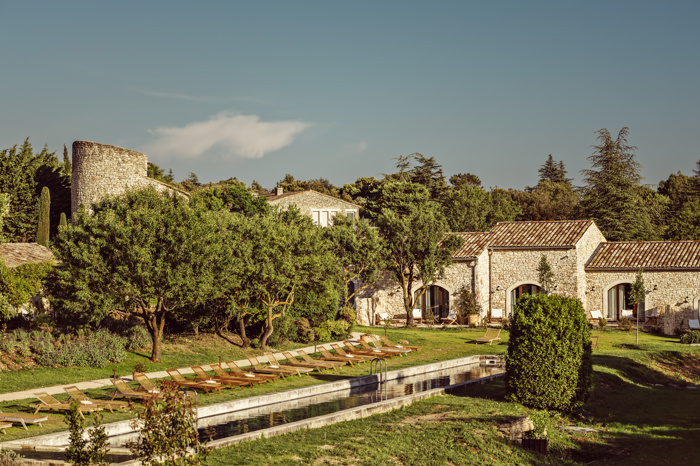
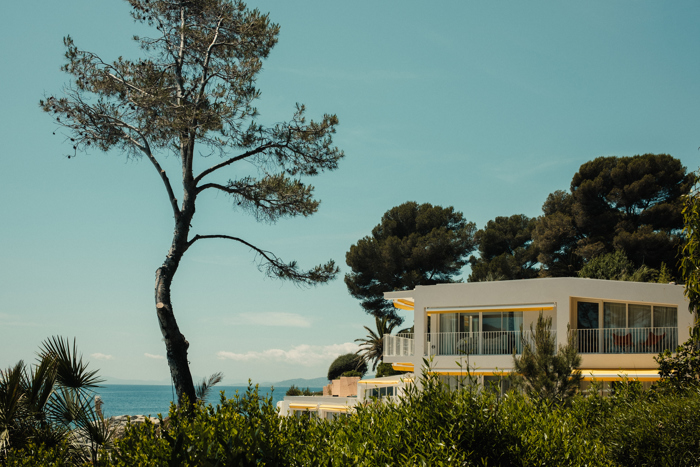
For those who want to sleep inside the village, Bonnieux has a small selection of chambres d'hôtes and rental houses tucked into its stone lanes. For something more considered, Capelongue sits above the village in the Luberon hills — a 5-star hotel in Provence with views across the valley, an exceptional kitchen garden, and the kind of stillness that makes it difficult to leave.
Bonnieux sits roughly 45 kilometres from Aix-en-Provence and 50 kilometres from Avignon. A car is essential — there is no train station and bus connections are limited. Parking is available around the perimeter of the village and is free.
Late spring and September offer the most comfortable conditions for walking the village's staircases and exploring the surrounding countryside. The Forêt des Cèdres is at its best in summer, when the shade it provides is most welcome. Bonnieux, unlike some of its neighbours, has enough restaurants and shops to draw visitors comfortably in winter too.
Lourmarin is a good base for exploring the countryside on foot or by bike. The trails of the Grand Luberon start almost from the village edge, winding through garrigue, dry-stone walls and cypress alleys before opening onto views that stretch to the Alps on clear days. For something more demanding, the Buoux site — about 15 kilometres east — is one of the most celebrated climbing spots in France, its limestone cliffs drawing enthusiasts from across Europe. Those who prefer two wheels will find quiet roads through the vineyards connecting Lourmarin to Cucuron, Ansouis and Cadenet with little traffic.
On Friday mornings from April to June and September to October, a guided market itinerary winds through the Lourmarin stalls with a focus on the best local producers — a good way to learn whose olive oil, whose cheese and whose honey is worth taking home. Later in the morning, the Château La Verrerie wine truck parks near the village square, offering tastings of estate wines alongside provisions from the local épicerie.
Bonnieux is a perched village in the Luberon, Provence, known for its dramatic hilltop position, the views from the Vieille Église terrace, the ancient Pont Julien Roman bridge, and its Forêt des Cèdres. It also has a respected Friday morning market and several excellent restaurants.
Yes — and more so than its relative obscurity might suggest. Bonnieux receives fewer visitors than Gordes or Roussillon, which means its market and streets retain a genuine local feel. The combination of village, forest, Roman bridge and valley views makes for a full and rewarding day.
Half a day covers the village comfortably. A full day allows for Pont Julien, the Forêt des Cèdres and a visit to neighbouring Lacoste. Those staying overnight have the pleasure of the village at either end of the day, when it is at its quietest.
Lacoste is directly across the valley (4 kilometres). Ménerbes, Gordes, Roussillon and Lourmarin are all within 20 kilometres. Bonnieux works well as a base for exploring the Luberon over several days.
This site is protected by reCAPTCHA.